Thursday, September 11, 2008

Forbidden Words Accordion Book


http://www.makingbooks.com/indexcard.shtml

When I was doing a poetry project with middle school kids last spring, I came across a poem with the word nice in it and cringed. I remembered that one of my children's teachers banned the use of the word in her classroom. While life would be way too exhausting if we always had to come with a creative and appropriate word every time we wanted to give a little positive acknowledgment, we certainly should avoid nice and other neutral and nondescript words in writing. This month's project is a book to keep track of forbidden words and come up with alternatives.

I made my book with just four pages instead of the 8 in the directions. I used one half of the side panel of a grocery bag for the accordion and pieces cut from a pancake mix box for the cards. I wanted to use the design on the box as a border so I wrote the words on cut pieces of paper (with writing on the other side) and glued them to the cards. You could also make a longer book to hang in the classroom with each student contributing a word.

LINKS

Word choice advice for writers: Forbidden words
Advice about avoiding overly used words in writing.
http://www.helium.com/items/418530-word-choice-advice-for-writers-forbidden-words

Wordy Wise
One teacher's take on forbidden words plus other ideas to expand vocabulary.
http://www.suite101.com/article.cfm/teaching_with_style/45695

Online Thesaurus
http://thesaurus.reference.com/

The Library/John Greenleaf Whittier

I am working on an installation for the Tenth Outdoor Sculpure Show at Maudslay State Park. I am using lines from the poems of John Greenleaf Whittier. I've read lots of his poems online at Project Gutenberg. I liked this poem written on the dedication of the Haverhill Library in because it describes some of the earlier forms of books.

THE LIBRARY.

Sung at the opening of the Haverhill Library, November 11, 1875.

"Let there be light!" God spake of old,
And over chaos dark and cold,
And through the dead and formless frame
Of nature, life and order came.

Faint was the light at first that shone
On giant fern and mastodon,
On half-formed plant and beast of prey,
And man as rude and wild as they.

Age after age, like waves, o'erran
The earth, uplifting brute and man;
And mind, at length, in symbols dark
Its meanings traced on stone and bark.

On leaf of palm, on sedge-wrought roll,
On plastic clay and leathern scroll,
Man wrote his thoughts; the ages passed,
And to! the Press was found at last!

Then dead souls woke; the thoughts of men
Whose bones were dust revived again;
The cloister's silence found a tongue,
Old prophets spake, old poets sung.

And here, to-day, the dead look down,
The kings of mind again we crown;
We hear the voices lost so long,
The sage's word, the sibyl's song.

Here Greek and Roman find themselves
Alive along these crowded shelves;
And Shakespeare treads again his stage,
And Chaucer paints anew his age.

As if some Pantheon's marbles broke
Their stony trance, and lived and spoke,
Life thrills along the alcoved hall,
The lords of thought await our call!

Saturday, August 30, 2008

Palm Leaf Books at the Met


Holland Cotter reviewed an exhibition entitled “Early Buddhist Manuscript Painting: The Palm-Leaf Tradition” in the South Asian galleries at the Metropolitan Museum of Art in the August 28 New York Times. He writes of the history of the palm leaf book and the importance of its portability in its survival.

Such practical features — size, resilience, portability — help explain why a similar form of palm-leaf art, the illustrated book, was popular in India between the 10th and 13th centuries. And they suggest why such books and their illustrations have survived into the present, while painting in more perishable media has not.

He discusses the subject matter, Buddhist sutras, and the many uses of the book.

So palm-leaf manuscripts, like most art, had multiple uses. They circulated spiritual information. They functioned as protective charms. They served as religious offerings, gifts from which karmic returns were expected. And they became objects of worship....

And a book could have a final use. It could be a personal possession; something to keep at home, carry around, examine up close whenever you pleased. That’s basically the experience offered by the scattering of palm-leaf pages at the Met, with their elegantly written texts and magnetic little pictures.


The exhibition continues until March 22, 2009.

Thursday, August 14, 2008

Upcycled Paper Journal


Keeping the terminology straight about recycling can be confusing. I usually talk about using recycled paper in my workshops but a more accurate term would be upcycled or repurposed. The term upcycle was coined by William McDonough and Michael Braungart, authors of Cradle to Cradle: Remaking the Way We Make Things. Wikipedia defines it like this: "Upcycling is the practice of taking something that is disposable and transforming it into something of greater use and value."

I love the way making books with upcycled materials forces me to think creatively as my usual methods don't necessarily work. For the journal, I wanted the book to be the size of regular copy paper folded in half and I wanted to use paper that already had writing on one side. My solution was to glue two pieces of paper together with the writing on the inside. It turns out that I really like the feel of turning the thick pages and I can even use sharpie markers without them showing through on the other side.

FOR THE PAGES:
You'll need two pieces of paper with writing on one side to make one sheet of paper for the book and a glue stick.
1. Place one piece of paper in front of you with the writing side up.
2. Put a line of glue stick glue going down each side.
3. Lining it up as carefully as you can, place a second piece of paper with the writing side down on top and press to help the paper adhere.

FOR THE COVER:
You'll need one piece of copy paper with writing on one or two sides, paper for collage, and glue stick and scrap paper. I used pages torn from catalogs, scraps of wrapping paper and old calendars that were in my collage box. Cut or tear pieces of collage paper and glue them to completely cover both sides of the paper.

For best results when gluing:
Place the piece you are gluing face down on a piece of scrap paper (I use pages from old catalogs). Cover the entire surface with a thin coat of glue. Glue sticks are easiest to use and least likely to make the paper buckle. Place the piece glue side down on the cover and rub to help the glue adhere. Fold the scrap paper in half with the glue on the inside so it doesn't get on anything.

PREPARING THE COVER AND PAGES FOR BINDING:
Folding
Fold the cover and each piece of paper in half. Tuck one inside the other with the cover on the outside.
Or stack them all together and fold them in half with the cover on the outside.
If you are used to more formal binding situations, you may find it worrisome that the pages are sticking out beyond the cover. For me, using recycled materials is also about acceptance and letting go.

Making the Holes

You will need two holes through all the layers of paper and the cover. Because we are binding with yarn, the holes need to be big. It will be impossible to punch through all the layers with a hole punch. You can punch the holes in the cover and then use that as a guide for the rest of the pages.

The holes should be about an inch down from the top and the bottom on the spine. To judge the distance, I put my thumb knuckle on the top or bottom of the book and make the hole right after my finger nail.


BINDING THE BOOK
You will need one piece of yarn about 24" long. I used it as is but you might find it easier to thread into the holes if you tape one end so that is like a shoelace. A couple of clothespins or other clips to hold the pages together is also helpful.

1. Go into the top hole from the outside of the book.
2. Go down to the bottom hole on the inside of the book and put the yarn through.
3. Go around the bottom of the book to go into the bottom hole from the inside.
4. Go along the outside of the book to the top hole.
5. Bring the yarn to the top of the book and tie the two ends together in a double knot.

MAKING THE BRAIDED BOOKMARK
You'll need three pieces of yarn, each about a yard and a half long.
1. Fold the pieces of yarn in half.
2. Place the center of the fold on top of the binding yarn knot and tie the binding yarn around the braiding pieces. Using three sets of two strands, braid the yarn.


LINKS ABOUT RECYCLING AND REUSING PAPER

Fun Facts about Recycling and More
Each ton of recycled paper can save 17 trees, 380 gallons of oil, three cubic yards of landfill space, 4,000 kilowatts of energy and 7,000 gallons of water! There are more facts are here. Explore Saint Louis County Resourceful Schools Project site further for information about setting up a recycling program at your school.
http://www.resourcefulschools.org/facts.html

How is paper recycled?
Cartoon illustrations and written information take you through the process of paper recycling. You can view it on the website or as a pdf.
http://www.tappi.org/paperu/all_about_paper/earth_answers/recycle2.htm

Printing Tips
Reduce is the first of the three Rs. Using less paper with your printer is a good place to start.
http://www.smartplanet.com/news/tech/10001567/12-money-saving-printing-tips.htm

Literacy and Family Bookmaking


I was recently having discussions with a parent about doing a Family Literacy Night at her child's school. When she presented the idea of a bookmaking workshop with me to the committee, one person said that she didn't understand what making books had to do with literacy. She convinced them and the workshop will go on. I am so close to the subject and so passionate about it, I realized I didn't even have an answer except: of course they have everything to do with each other.

I decided I need to search the internet for some further information. Teachingmatters.org gave me just what I was looking for in their information about Balanced Literacy.

Balanced literacy is an approach for teaching literacy that is widely used in classrooms across the country. It involves several methods of teaching and learning reading and writing, whole class instruction directed by the teacher with independent work in reading, writing, and oral language. By integrating a variety of approaches, a balance is achieved in which students learning to understand text (from a whole language approach) as well as how to read text (from a phonics approach).

The section that I think particularly pertains to making books with children in general and family workshops in particular is:

Independent Writing
Integral to the process is independent writing, which provides students with the consistent opportunity to apply and practice the skills already introduced and to cultivate their love of and comfort with writing on their own level.


In order to get good at writing, just as in order to get good at reading, quantity is important as well as quality. I was a big reader as a child and read Little Women and a lot of the classics, but I also read every Bobbsey Twins, every Nancy Drew, and lots of Cherry Ames and that was where I got to be comfortable with reading. With writing it is the same. We need to learn sentence and paragraph structure and grammar, but we also need to learn to take joy in writing, to express ourselves with freedom and abandon. I can't remember ever seeing a child make a book and not want to write in it immediately. The handmade book sets the stage for the writing experience

Extending bookmaking out of the classroom and into the home is a logical next step. With all the material that teachers are required to cover during the school year, finding time for children to write for pleasure about the things they care about can be difficult. I feel that now, more than ever, teachers and schools need the support of parents at home. But it shouldn't just be about memorizing multiplication facts and doing worksheets. The home can be a place where creative learning happens. And the wonderful thing is that parents will find that their own lives will be enriched in the process. They often tell me how relaxed they feel after one of my family bookmaking workshops.

When I started using recycled materials for my workshops, I had two reasons. One was environmental: to consume less. The other was to make bookmaking easy to continue at home. With no special papers or materials to purchase, it is inexpensive and easy to get started. I have since discovered that it is also liberating, especially to adults. While children are very free about writing in the books they create, adults are often afraid. What if I mess it up?, they think. With recycled materials, it doesn't matter; they have only used paper that was going to the recycle bin.

We can improve literacy and all grow as writers, readers, and creative human beings at the same time.

I offer Family Workshops to schools and libraries in Massachusetts and southern NH and Maine.

Wednesday, July 30, 2008

Books are intimate...


Books are intimate; they welcome personal encounters.
Books are humble; they fulfill their potential closed as well as open.
Books have depth; they are rich with the possibilities of endless variation.
Books have spirit; they are dwelling places for our thoughts and dreams.


I wrote a version of this in my early years of making books and for a long time it was on the entry page to my art website. Over the years I have seen it pop up here and there as an anonymous poem.

There is a link to a pdf version on my in good spirit blog.

Monday, July 28, 2008

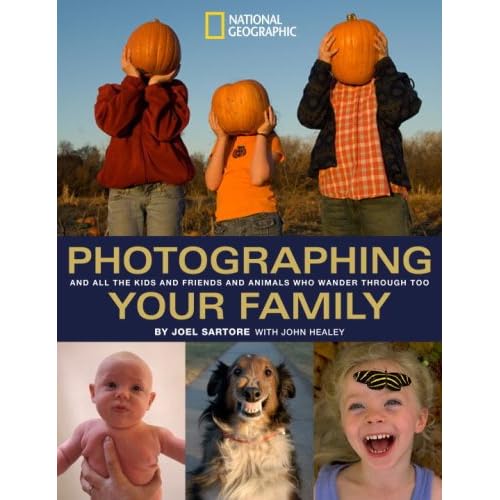
Photographing Your Family


Photographing Your Family: And All the Kids and Friends and Animals Who Wander Through Too (NG Photography Field Guides) by Joel Sartore with John Healey has a couple of paragraphs about makingbooks.com and my belief in the value of making books with children in the chapter on Printing, Displaying, and Storing Your Photographs. Joel Sartore is an acclaimed National Geographic photographer. Although he has traveled the world, his favorite subjects are his family at home. He has definite ideas about what makes a good photograph with a particular feeling for crying babies (But it's the pictures of kids crying that remind us what is was like to be a parent with young children. They're entertaining and they're emotional. And that's what a good photograph is: It is a picture with good light, a clean background, and some emotion). I particularly like that he puts emphasis on photographing daily life as well as trips and special events.

Joel Sartore is someone for whom photography is a way of the life and the camera seems like an extension of his body. The book is illustrated with his photographs of his family accompanied by his comments which include why he likes or doesn't like a particular photo, what he was thinking at the time he took it, and comments about composition and light. He uses digital cameras and gives lots of clearly presented technical information. While I think those with a certain level of comfort in using their cameras will get more from the book, there is much to offer at all levels. Because it is amply illustrated and well-designed, it is a pleasure to repeatedly leaf through the pages. I have found that I have been able to absorb something more with each viewing.